Friday, December 9, 2016
Wednesday, December 7, 2016
5 Websites
Projector Brought Into the Forest Turns Nature Into a Glowing Wonderland
I picked this photo because of the dark simplicity that is shown. I also liked this photo because of the emphasis that is put on the glowing part of the tree; I also very much enjoy how the sun seems be rising, like early morning, which a time anyone hardly photographs. Which in honesty is so beautiful, and so in touch with nature.
Some rules of photography included are the rule of thirds and bit of framing with the other trees.
The photo taken was actually originally video taken by photographer Tarek Mawad and animator Friedrich van Schoor, who worked together to get multiple aspects of the forest and nature being lighten up.
In their video they have many plants and even bugs and animals glowing, it's a rather peaceful video of nature. Both artists spent around six weeks to illuminate these subjects with a powerful projector made it seem like the subjects were glowing. And this was made by just a computer, a projector and a DSLR on a slider.
I learned that in photography you don't even have to edit your photos to get very cool illuminate subjects, it can be done by hand and projecting the animation on your subject while taking your photo.
6 Types of Photos Every Photographer Should Know How to Make
What on I saw on this website was about changing the perspective and exposure of an image you take to get something different for the image. All of these types of ways to photos all have to do effects that you can make to change your image. I also many different examples of each of these new types of images to take such as long exposure landscape, digital infrared, double exposure portraits, forced perspective, and fake tilt and shift photos.
I learned how to make a fake tilt and shift photo because an actual tilt-shift lenses is quite expensive (which is what was used to make the image above). But by using some photoshop and some perspective changes you can create something similar.
This relates to photography because the article takes about different new ways to make interesting and unique photography images.
10 Photography Resolutions for the New Year
On this website, I saw many different ways to stay organized as a photographer. I also saw many different types of photographs that would be vey neat to try out. Many of the photos were unique and had very distinct features and were creative as possible.
I learned to be more confident when it comes to photography, such as daring to use multiple elements in an image and also by nit being afraid of using photoshop to get creative images. I also learned that it's always best to photograph what you know, such loved ones, friends and family.
This website relates to photography by letting photographers to take leaps and experiment with their photography. That sometimes being confident and assertive can get you the best pictures yet.
What makes a killer timelapse, with Joe Capra | TED Blog
In this time-lapse video, of Rio de Janeiro, I got to see the multiple beauties of the city all moving at high speed. There were multiple shots of far away scenery as well as close-up objects. Also got to see the city go from day to night and back.
The creator of this video was Joe Capra, a time-lapse video photography, from Scienefanastic, shows multiple shots of the beautiful city of Rio, including Copacabana Beach, waterfall, and ships on the city's harbor.
Carpa has already made a similar time-lapse video of Iceland which got him a gig to go to Rio and take the video shown on the website. It took a lot of planning to get each 5-10 second shots present in the video, such as plans of what sceneries were to be taken, the pace that the lapse would go at, and what type of shot would be taken such as: "would the shot move around the waterfall or stay in place?"
Something that learned was about all the planning it takes to get a good shot because of course time-lapse is fascinating but its better when well thought out. When the shots are better when the camera isn't moving, theres clear change in the environment, etc. I also learned about how much time is dedicated to a time-lapse video because a 10 second shot would have to be taken over a period of a few hours when slow, steady changes are being taken to speed up.
How to Make Cinemagraphs — Still Photos that Move Like Movies! | Photojojo
This could be possibly used in this class late on if there is an individual project that requires to be creative with what you take. this technique of photography may not be what this class is looking for but can most certainly be of use for personally reasons.
This very much helped with my knowledge of Adobe Photoshop, the version being used was the CS4 version.
I picked this photo because of the dark simplicity that is shown. I also liked this photo because of the emphasis that is put on the glowing part of the tree; I also very much enjoy how the sun seems be rising, like early morning, which a time anyone hardly photographs. Which in honesty is so beautiful, and so in touch with nature.
Some rules of photography included are the rule of thirds and bit of framing with the other trees.
The photo taken was actually originally video taken by photographer Tarek Mawad and animator Friedrich van Schoor, who worked together to get multiple aspects of the forest and nature being lighten up.
In their video they have many plants and even bugs and animals glowing, it's a rather peaceful video of nature. Both artists spent around six weeks to illuminate these subjects with a powerful projector made it seem like the subjects were glowing. And this was made by just a computer, a projector and a DSLR on a slider.
I learned that in photography you don't even have to edit your photos to get very cool illuminate subjects, it can be done by hand and projecting the animation on your subject while taking your photo.
6 Types of Photos Every Photographer Should Know How to Make
What on I saw on this website was about changing the perspective and exposure of an image you take to get something different for the image. All of these types of ways to photos all have to do effects that you can make to change your image. I also many different examples of each of these new types of images to take such as long exposure landscape, digital infrared, double exposure portraits, forced perspective, and fake tilt and shift photos.
I learned how to make a fake tilt and shift photo because an actual tilt-shift lenses is quite expensive (which is what was used to make the image above). But by using some photoshop and some perspective changes you can create something similar.
This relates to photography because the article takes about different new ways to make interesting and unique photography images.
10 Photography Resolutions for the New Year
On this website, I saw many different ways to stay organized as a photographer. I also saw many different types of photographs that would be vey neat to try out. Many of the photos were unique and had very distinct features and were creative as possible.
I learned to be more confident when it comes to photography, such as daring to use multiple elements in an image and also by nit being afraid of using photoshop to get creative images. I also learned that it's always best to photograph what you know, such loved ones, friends and family.
This website relates to photography by letting photographers to take leaps and experiment with their photography. That sometimes being confident and assertive can get you the best pictures yet.
What makes a killer timelapse, with Joe Capra | TED Blog
In this time-lapse video, of Rio de Janeiro, I got to see the multiple beauties of the city all moving at high speed. There were multiple shots of far away scenery as well as close-up objects. Also got to see the city go from day to night and back.
The creator of this video was Joe Capra, a time-lapse video photography, from Scienefanastic, shows multiple shots of the beautiful city of Rio, including Copacabana Beach, waterfall, and ships on the city's harbor.
Carpa has already made a similar time-lapse video of Iceland which got him a gig to go to Rio and take the video shown on the website. It took a lot of planning to get each 5-10 second shots present in the video, such as plans of what sceneries were to be taken, the pace that the lapse would go at, and what type of shot would be taken such as: "would the shot move around the waterfall or stay in place?"
Something that learned was about all the planning it takes to get a good shot because of course time-lapse is fascinating but its better when well thought out. When the shots are better when the camera isn't moving, theres clear change in the environment, etc. I also learned about how much time is dedicated to a time-lapse video because a 10 second shot would have to be taken over a period of a few hours when slow, steady changes are being taken to speed up.
How to Make Cinemagraphs — Still Photos that Move Like Movies! | Photojojo
(Image Not Mine)
What I learned from this website was how to make a GIF from a photograph. But the thing about a this sleek and sophisticated GIF is that instead of the whole image moving it's just a certain area, such as the eyes from the photo above.This could be possibly used in this class late on if there is an individual project that requires to be creative with what you take. this technique of photography may not be what this class is looking for but can most certainly be of use for personally reasons.
This very much helped with my knowledge of Adobe Photoshop, the version being used was the CS4 version.
Sunday, December 4, 2016
Magazine Review Assignment
#1- Magazine Tips
- You should be thinking of the image's appeal. What type of audience is the image/cover intended towards?
- How captivating is the image? How is the image going to pull someone in?
- How interesting (intellectually) is the image? How simulating or beneficial is the image?
- How recognizable is the image if it includes some sort of brand?
- How simple and efficient is the image? How is it going to portray a service or message?
#2- Best Magazine Covers
- Bloomberg Businessweek - Informal
- New York - Formal
- The New York Times Magazine - Informal
- Sports Illustrated - Environmental
- The New York Times Magazine - Formal
- O, The Oprah Magazine - Informal
- Brides - Formal
- W - Environmental
- New York - Informal
- The Fader - Formal
- Vanity Fair - Formal
- Atlanta - Formal
- Harper's Bazaar - Informal
- DuJour - Informal
- Parents - Environmental
- The New York Times Magazine - Informal
- Vogue - Formal
#3- My Favorite Cover
The New York Times Magazine, October 6, Harry Who?
Photographer: Richard Burbridge
Designer: Arem Duplessis
"This classic Richard Burbridge portrait of Daniel Radcliffe, shot in his trademark heightened black-and-white style, reveals a grown-up Radcliffe not yet at ease with his fame. The extended ascenders and descenders in the typography reference the Harry Potter logo and also serve as a framing device for the image."copy and paste description
I personally very much liked this cover for multiple reasons, not just including the fact that Daniel Radcliffe is one of my personal favorite celebrities, but the black-and-white tones of this portrait are very intriguing. To be honest, the black-and-white of this image isn't a distinct black and white, these tones are more of a range of grays which I find is much more interesting then tedious black and white. I also enjoy how your focus is brought to the eyes of Radcliffe, they happen to pop out the most in this image which I believe is because this is the only area of the image where there is pure white. It seems like none of the basic rules of photography (such as rule of third) we have gone over are present in the image but this informal portrait has included a bit of filling the frame by having the subject as close as possible.
This image also gives you lots of thoughts in your head. Some fans of Radcliffe are used to seeing him as his Harry Potter character and this image makes us question why he isn't in character. But I also feel that this is the point of the image, to share this celebrities other sides/faces, for he seems a bit sad or desperate. Sad because no one notices his other roles and desperate to be seen in other ways than this one character.
#3- Magazine Cover Types
1.) Imaged Based- Some attributes, include have people has the main subject for some magazines. An approach used in celebrity and fashion magazines which usually includes one or a few people on the cover, possibly posing and smiling. Sometimes different magazines do the opposite of this. The nature of the cover matches the style of the rest of the magazine.
2.) Illustration Based- When magazines were first published, illustrations was the only way to have a cover page. Only a few magazines such as The New Yorker still uses illustrations as their cover from time to tome. Most of these illustrations are used to create something funny and unique. Most magazines that use illustrations don't need to depend too much on the cover to get sales. Many of the illustrations are mostly computer generated.
3.) Typed Based- This is a considered a "rare" but unique approach to a cover. Typed covers have something powerful to them with how it's looks and how it's presented. Sometimes it can convey a message better than photography.
4.) Concept Based- Is very often is a bit of all of the other three types of covers. Its best when used to convey a powerful message, in either a shocking or funny way. It's important that the funny idea being conveyed is to be understood by your audience. This type is usually seem in business, news weekly, independent, and subscription only magazines.
The relationship between words and photos on a magazine cover is important because these two elements work together to give the reader an idea of what is to be within the magazine. They work together to help convey any strong messages needed to be sent. The photograph can only say so much and words are needed to fill in the blanks, and in the meantime where words lack, photos come in to help with visual representations.
Wednesday, November 30, 2016
Mural Project
My group's theme is the Texas flag. When looking at my images individually it's hard to image how they would pertain to the Texas flag. But when my groups members' photos and my photos come together we will arrange them to make out the Texas flag. The part of the flag that I got to take photos were blue and red.
Monday, November 7, 2016
Self Portrait and Portraits l
TIPS
Experimenting with Lighting:
there are many things you could do when it comes to using light in portraits; there are endless possibilities.
Lighting possibilities, such as side-lighting, can create mood and backlighting. Also, silhouetting your subject to hide their features can be powerful.
Introduce a Prop:
You can included a prop of some kind into your shots. It can create a better point of interest that will enhance your shot.
You have the risk of taking away the focus from your main subject. It can add a sense of story and place to the image that takes it in a new direction though. It also gives the person you're photographing an extra layer of depth that they would gave had without the prop.
Take Unfocused Shots:
As photographers. there is a 'sharp focus' rule drilled into our brains as an ultimate objective to achieve in our work. The sharp focus can feel a bit overrated; sometimes lack of focus can create shots with real emotion, mood and interest.
I really like this photo because the painting dripping of the person can represent so many things. The expression the person has conveyed is very deep and distant, almost sad. as if that's what she really feels even of the only thing you can see is the happiness (the colorful paint). I picked this image because of the background which is just a simple green color that matches the paint. The image also includes cropping with the girl being close up.
Experimenting with Lighting:
there are many things you could do when it comes to using light in portraits; there are endless possibilities.
Lighting possibilities, such as side-lighting, can create mood and backlighting. Also, silhouetting your subject to hide their features can be powerful.
Introduce a Prop:
You can included a prop of some kind into your shots. It can create a better point of interest that will enhance your shot.
You have the risk of taking away the focus from your main subject. It can add a sense of story and place to the image that takes it in a new direction though. It also gives the person you're photographing an extra layer of depth that they would gave had without the prop.
Take Unfocused Shots:
As photographers. there is a 'sharp focus' rule drilled into our brains as an ultimate objective to achieve in our work. The sharp focus can feel a bit overrated; sometimes lack of focus can create shots with real emotion, mood and interest.
DIFFERENT TYPES OF PORTRAITS
Environmental Portrait
I really liked this photo because of how elegant the Queen's guard is and how simple the image is. I picked it because it includes the rule of third because the guard is standing off to one side of the shot.
I really liked this photo because of how the ocean around the girl was captured, with pristine and beautiful waters. I picked the photo because of how the water around the girl kind of frames her. The horizon of the water also follows the rule of thirds.
Photography Self Portrait
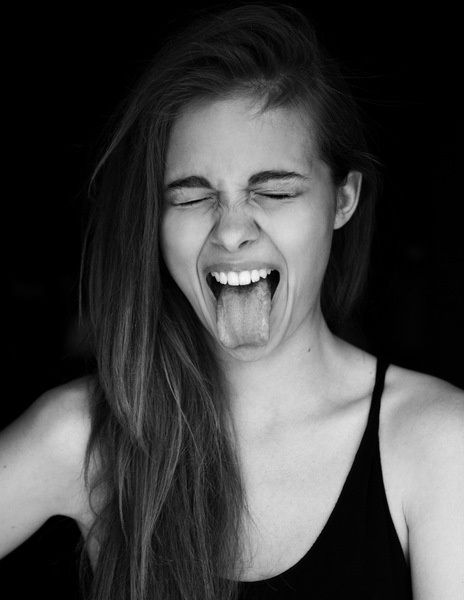
I really like this image because of the expression it conveys, it manages to capture this girl's inner thoughts, or just her inner self. I picked the photo because of the balance the girl has cross the image.
I really like this photo because the painting dripping of the person can represent so many things. The expression the person has conveyed is very deep and distant, almost sad. as if that's what she really feels even of the only thing you can see is the happiness (the colorful paint). I picked this image because of the background which is just a simple green color that matches the paint. The image also includes cropping with the girl being close up.
Casual Portrait
I really liked this photo because of the story it sort of tells. It shows us a little girl reading some fairytales which can inflict any type of emotion in the girl (it's just cute in general). I picked this photo because it fills the frame and includes a bit of a viewpoint angle.
I liked this photo because of the action that has been captured. A mother has picked up her little girl and the whole family is clearly having a fun time. I picked the picture because of the depth that has been presented here. There is a field behind this family that is blurred out and clearly looks like its far away, which is how the depth is created. There has also been some elements of balance because not only are the people evenly spread out across the image, both females of this family are sitting up and higher up on the image. In the meantime, the males are sitting farther down, almost laying down in the image, so that;s how some balance has been created horizontally.
I plan to take photos of family and of myself. Family members such as my sister and other relatives, such as my close cousins who I see often. I will probably take these photos outside where lighting will be better than indoors. I will probably want my subjects interact with nature which could include trees (I would probably go to a park). I will want to use my rules of photography, especially rule of thirds, balance, leading lines and cropping, to get a successful shot.
Sunday, November 6, 2016
American Soldier
A. I believe the most powerful image printed in the Denver Post was the one titled "FOUR-MAN STACK" that was published the week of Sept. 12, 2009. I feel this is a very powerful image because the image includes four soldiers, but the thing is these soldiers look nothing like men, they're boys. This is seems very powerful to me because these boys chose to be a part of the army, mostly because they're innocent. I feel that if the same image was taken but years later, these boys would no longer have shiny faces or kiddy faces. I assume there would instead be sad, ashy faces that have seen more than any youngster should see.
For me this image is very touching and powerful for children have taken part of wars and there's nothing anyone can do for they chose this path.
B. The image work together to show the chronological events of Ian's journey, which includes many bumps and twists. Each image has details to it that when multiple pictures are put together they create something. Each image has something of importance, kind of like a main point or event of a story.
C. Captions enhance the photographs because they give us background info that can't be told from the image such as emotion, possibly thoughts. Also, whoever said that a picture is worth a thousand words, well they weren't wrong, but we don't know what those thousand words are so the captions are there to give us details on the whats, the hows, the whos, etc.
D. When Ian Fisher was to turn 18 he would enlist in the Army. His final day before leaving home with a recruiter, Fisher shared a final hug with friends.
In Fort Benning, in Georgia, was where Military basic training was to begin. It actually began with officers making the new recruits dig through a pile of duffel bags to try to find their own within two minutes. this was done simply to see who would quit in a short period of time, and teach those that don't a lesson.
Later on, Fisher began feeling like a real soldier after being issued M-16s, still being rather childish by making shooting noises. The recruits were already presented with a simulated explosive practice, where Fisher faced obstacles, including a situation where only half of the squad survived, leaving just Fisher and a few others.
While Fisher had an 11 month leave from the Army, before going back to Iraq, Fisher spent those month speaking with his father. His father spoke to him about the medicine he's been taking, concerned that there may be a problem, Fisher simply brushed it. Eventually before Fisher knew, the medicine progressed to substance abuse. Fisher turned to extra outside help, a counselor, so that he could stop before the military found out and he got kicked out. In the end, Fisher ended up getting pushed down a rank because of the drug abuse.
In Iraq, Fisher was in the role of driving the vehicles, Humvee. Fisher had to be able to make it to home base, Camp Echo within 15 minutes, just in case of emergencies, Fisher was also instructed to drive the vehicle aggressively at all times, another precaution. Camp Echo offered a gym, phone service, arcade, and video games.
Eventually, Fisher ended up marrying his latest girlfriend, Devin, on August 24, 2009.
E. In the photos where Ian is main subject the captions are written in present tense.
F. Analyzing the captions:
G. I do think that it is possible to tell a complete story with just photos and captions because if someone can capture a great picture that shows emotion and expressions, and if captions can be written right, then (cliché as it may be) anything can be possible in the art of story telling through photography.
H. Even if you can create a story with photos and captions, it is impossible to completely cover the entire narrative with just photos and captions. Whenever you write a story you also have very important and deep details, such as thoughts, that can't be as well conveyed in just photos and captions.
For me this image is very touching and powerful for children have taken part of wars and there's nothing anyone can do for they chose this path.
B. The image work together to show the chronological events of Ian's journey, which includes many bumps and twists. Each image has details to it that when multiple pictures are put together they create something. Each image has something of importance, kind of like a main point or event of a story.
C. Captions enhance the photographs because they give us background info that can't be told from the image such as emotion, possibly thoughts. Also, whoever said that a picture is worth a thousand words, well they weren't wrong, but we don't know what those thousand words are so the captions are there to give us details on the whats, the hows, the whos, etc.
D. When Ian Fisher was to turn 18 he would enlist in the Army. His final day before leaving home with a recruiter, Fisher shared a final hug with friends.
In Fort Benning, in Georgia, was where Military basic training was to begin. It actually began with officers making the new recruits dig through a pile of duffel bags to try to find their own within two minutes. this was done simply to see who would quit in a short period of time, and teach those that don't a lesson.
Later on, Fisher began feeling like a real soldier after being issued M-16s, still being rather childish by making shooting noises. The recruits were already presented with a simulated explosive practice, where Fisher faced obstacles, including a situation where only half of the squad survived, leaving just Fisher and a few others.
While Fisher had an 11 month leave from the Army, before going back to Iraq, Fisher spent those month speaking with his father. His father spoke to him about the medicine he's been taking, concerned that there may be a problem, Fisher simply brushed it. Eventually before Fisher knew, the medicine progressed to substance abuse. Fisher turned to extra outside help, a counselor, so that he could stop before the military found out and he got kicked out. In the end, Fisher ended up getting pushed down a rank because of the drug abuse.
In Iraq, Fisher was in the role of driving the vehicles, Humvee. Fisher had to be able to make it to home base, Camp Echo within 15 minutes, just in case of emergencies, Fisher was also instructed to drive the vehicle aggressively at all times, another precaution. Camp Echo offered a gym, phone service, arcade, and video games.
Eventually, Fisher ended up marrying his latest girlfriend, Devin, on August 24, 2009.
E. In the photos where Ian is main subject the captions are written in present tense.
F. Analyzing the captions:
- There 2 sentences, on average.
- The info provided in the first sentence of the captions is who, what, where, when, why, and how. These details pertaining to the image.
- The info provided in the second sentence of the captions is usually extra information that adds to the effects or understanding of the image.
- If there happens to be a third sentence, these sentences usually include a quote
- A few captions do include quotes.
- There are no captions with four sentences. It is possible that I have a missed that does have a fourth sentence.
G. I do think that it is possible to tell a complete story with just photos and captions because if someone can capture a great picture that shows emotion and expressions, and if captions can be written right, then (cliché as it may be) anything can be possible in the art of story telling through photography.
H. Even if you can create a story with photos and captions, it is impossible to completely cover the entire narrative with just photos and captions. Whenever you write a story you also have very important and deep details, such as thoughts, that can't be as well conveyed in just photos and captions.
Subscribe to:
Posts (Atom)